
Industrial Deaerator
Reliable performance and custom engineering for your boiler feedwater systems
When boiler feedwater system reliability is critical, BFS deaerators offer a proven solution. As a recognized brand in the field, BFS equipment is already installed in several industrial facilities across Québec.
BFS deaerators are available in pressurized configurations, with or without an integrated storage tank, and come ready to install.
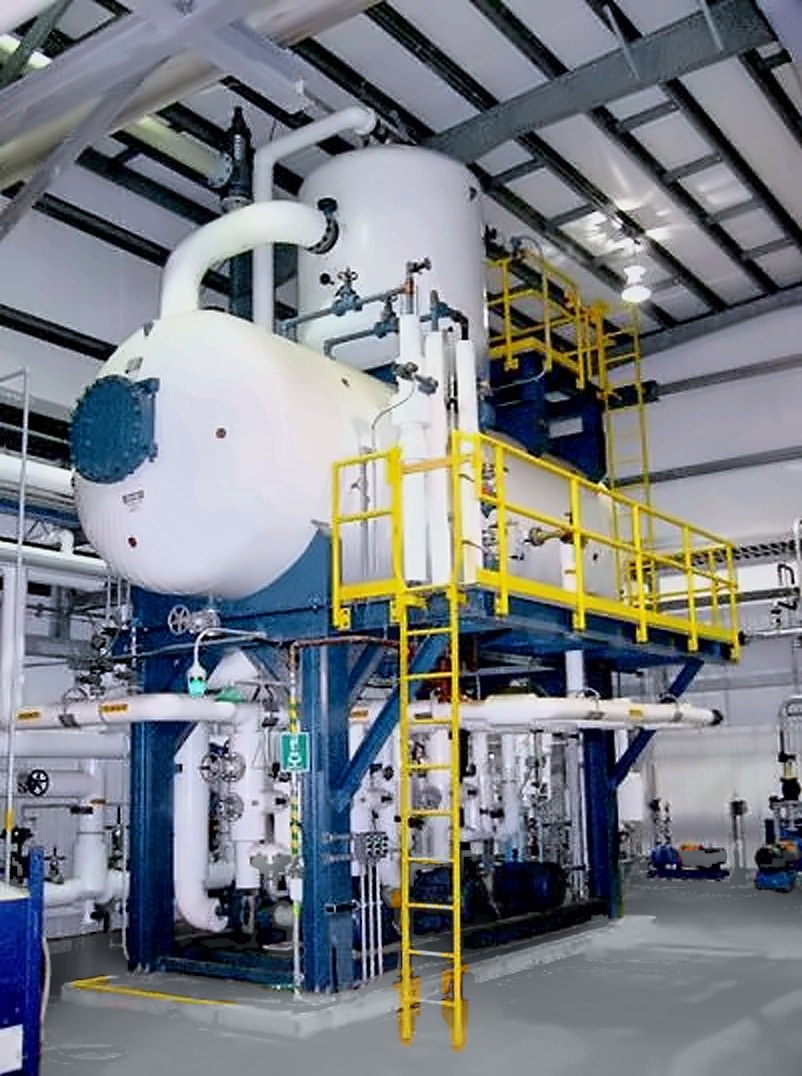

Why choose a BFS deaerator?
Since 1946, BFS has focused on one thing: boiler feedwater systems. Born in a small Brooklyn shop, the company now manufactures in Butner, North Carolina, and celebrates its 80th anniversary in 2026. Over the decades, that specialization has made BFS a reference in the field, with thousands of installations across North America.
High thermal efficiency
Maximum removal of dissolved gases through an optimized design, down to 0.005 cc/litre of residual oxygen.
A system engineered as a whole
Each system is engineered by a dedicated team at BFS. Deaerator, tank, pumps, piping and control panel are designed together and pre-assembled at the factory for quick commissioning. Control panels are built in the BFS shop and certified cUL/CSA.
Adaptability
Standard or fully customized fabrication based on your operating conditions (pressure, temperature, capacity, spatial constraints). In existing boiler rooms, the deaerator and surge tank can be stacked or mounted end to end. BFS also builds systems for classified hazardous areas, outdoor installation and seismic zones.
Three condensate return inlets
The deaerator receives condensate returns through three separate inlets according to their temperature — a design built on the experience of systems in service.
Local support
Nearby expertise and seasoned Québec engineers, from equipment selection through commissioning.
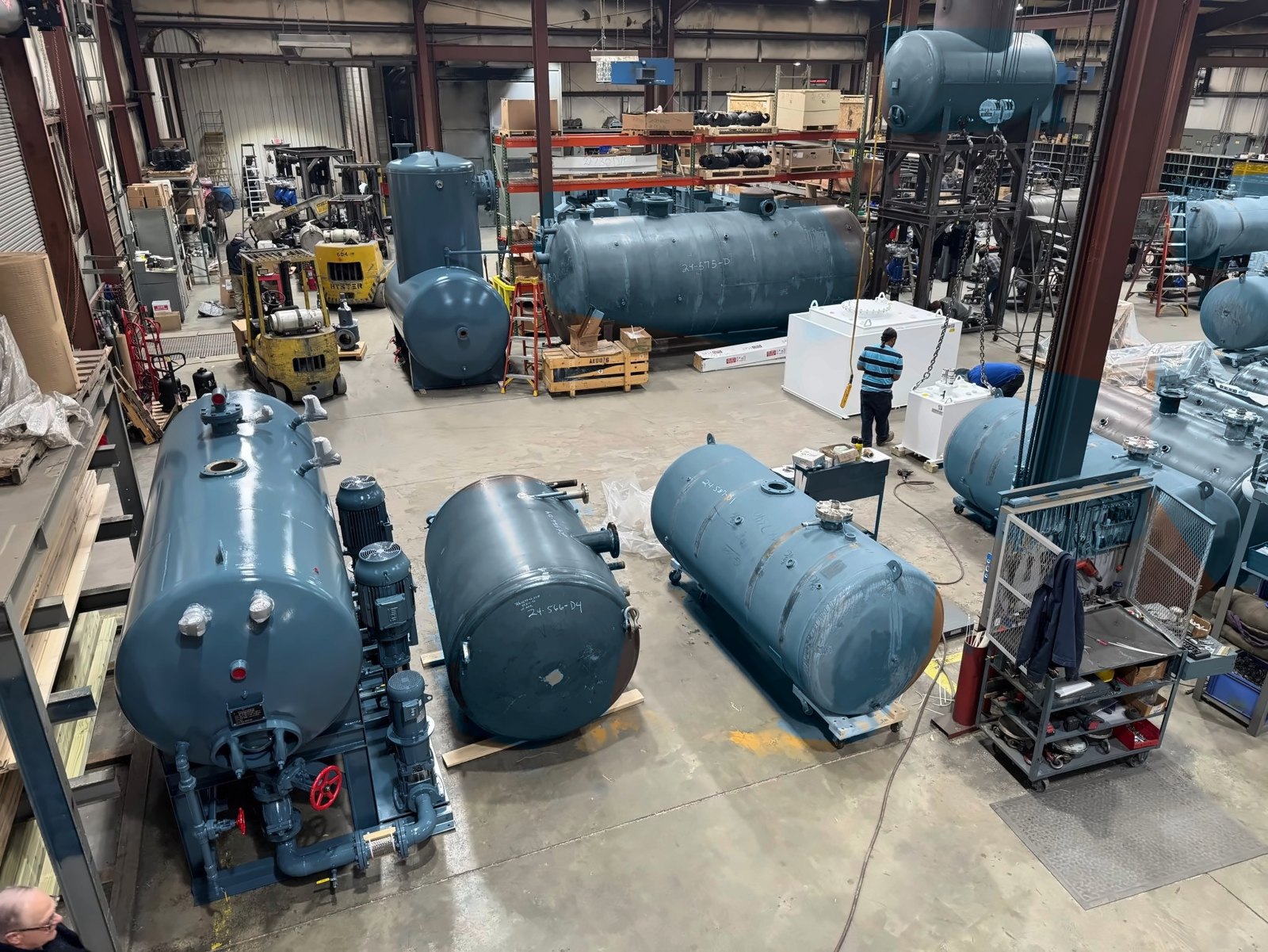
BFS Deaerator Models
Optimized thermal performance and mechanical efficiency
BFS manufactures two primary types of pressurized deaerators, each using a specific mechanical approach to enhance dissolved gas removal from boiler feedwater.
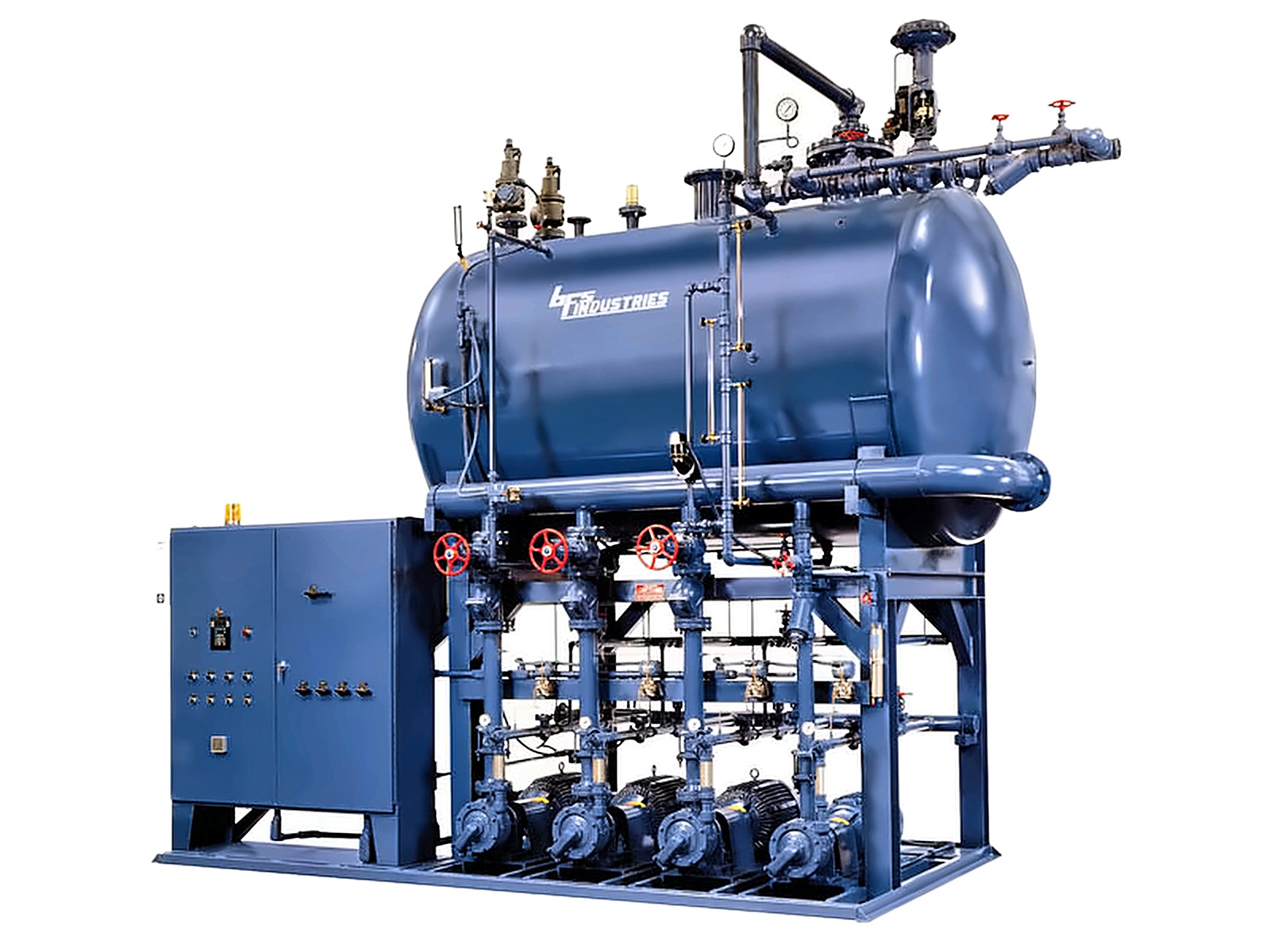
Spray-Type Deaerator – Class S
- Pressurized operation with mechanical spray system.
- Water is atomized through spray nozzles to maximize surface area in contact with steam.
- Compact and efficient design.
- Ideal for medium- to high-capacity boiler systems.
- Typical operating temperature: up to 105 °C (227 °F).
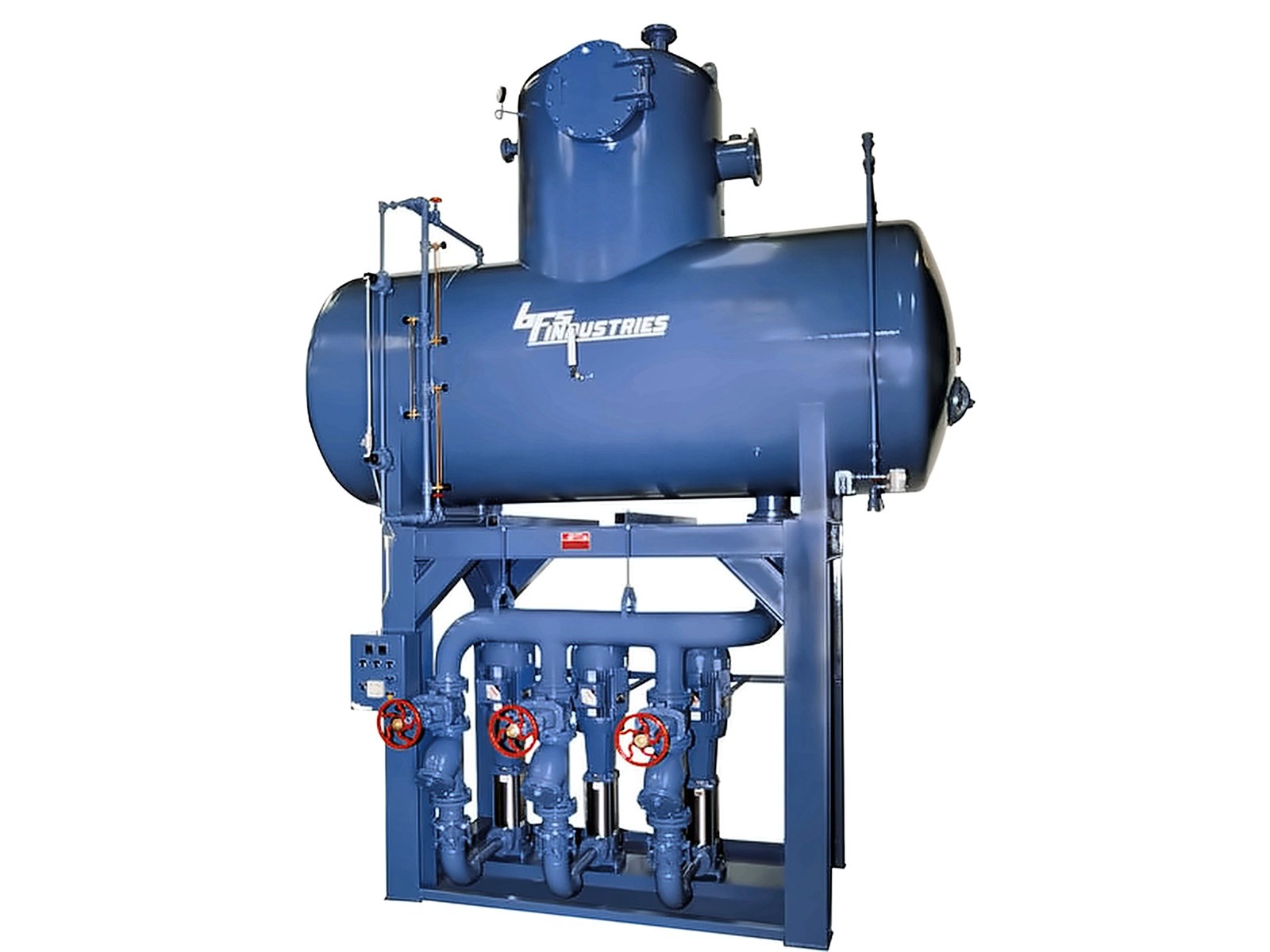
Tray-Type Deaerator – Class T
- Pressurized operation with cascading trays.
- Water flows from tray to tray, enhancing steam contact and mechanical degasification.
- Designed for applications requiring extremely low oxygen levels.
- Exceptional performance for large-capacity or high-purity systems.
- Oxygen removal to < 0.005 cc/liter.
Brochures and technical documents
Need more technical detail? The guide specification and dimensional drawings for each model are available on request.
Key Technical Features
BFS deaerators are engineered for a wide range of industrial steam system applications. Available specifications include:
Optional equipment: direct steam injection heaters, feedwater pumps, full instrumentation. Each BFS deaerator is designed to optimize boiler feedwater preheating and reduce corrosion risks by ensuring the efficient removal of dissolved gases.
Selecting a deaerator
The right deaerator depends less on capacity than on how the boiler room actually runs: load swings, the share of make-up water and the temperature of the condensate returns.
Tray or spray type: how to choose?
Both types guarantee 0.005 cc/litre of residual oxygen (7 ppb) at the outlet. The difference lies in the margin each one keeps when actual conditions drift from the specification: reduced load at night, on weekends or in summer, returns hotter than expected, variable make-up.
| Criterion | Spray – Class S | Tray – Class T |
|---|---|---|
| Load | Steady, few swings | Variable: nights, weekends, summer |
| Cold make-up water | Moderate | High, over 50 % |
| Condensate returns | Warm returns | Hot returns, near saturation |
| Water-to-steam temperature difference | At least 30 °C (50 °F) required | Not sensitive |
| Scaling water | Less sensitive | Trays to inspect and clean |
| Available height | More compact | Taller (tray column) |
Preliminary selection for guidance only. The final selection is confirmed by ExoCarbo and BFS.
Pressurized vs. Atmospheric Deaerators
The two families differ in the water temperature they can reach. An atmospheric deaerator operates at ambient pressure, so its temperature is capped just under 100 °C, and it leaves a higher residual oxygen content.
A pressurized deaerator operates above atmospheric pressure — 5 to 50 psig across the BFS range — bringing the water up to 105 °C and allowing residual oxygen below 0.005 cc/litre. This is the configuration specified for industrial steam boilers, where dissolved oxygen is a leading cause of corrosion in the tube bundle and the condensate network.
At what steam flow does a deaerator pay off?
The threshold depends as much on the share of make-up water as on the steam flow. The higher the make-up, the more oxygen the water brings in and the more the chemical treatment a deaerator avoids ends up costing.
A well-preheated condensate tank, around 85 °C (185 °F), still leaves 1 to 5 ppm of oxygen in the water — several hundred times more than a pressurized deaerator. That oxygen has to be neutralized with sulphite, every hour of operation. Above the threshold, the savings in chemicals and energy generally pay back the deaerator within an economically attractive period.
Condensate tank or deaerator? Run the numbers →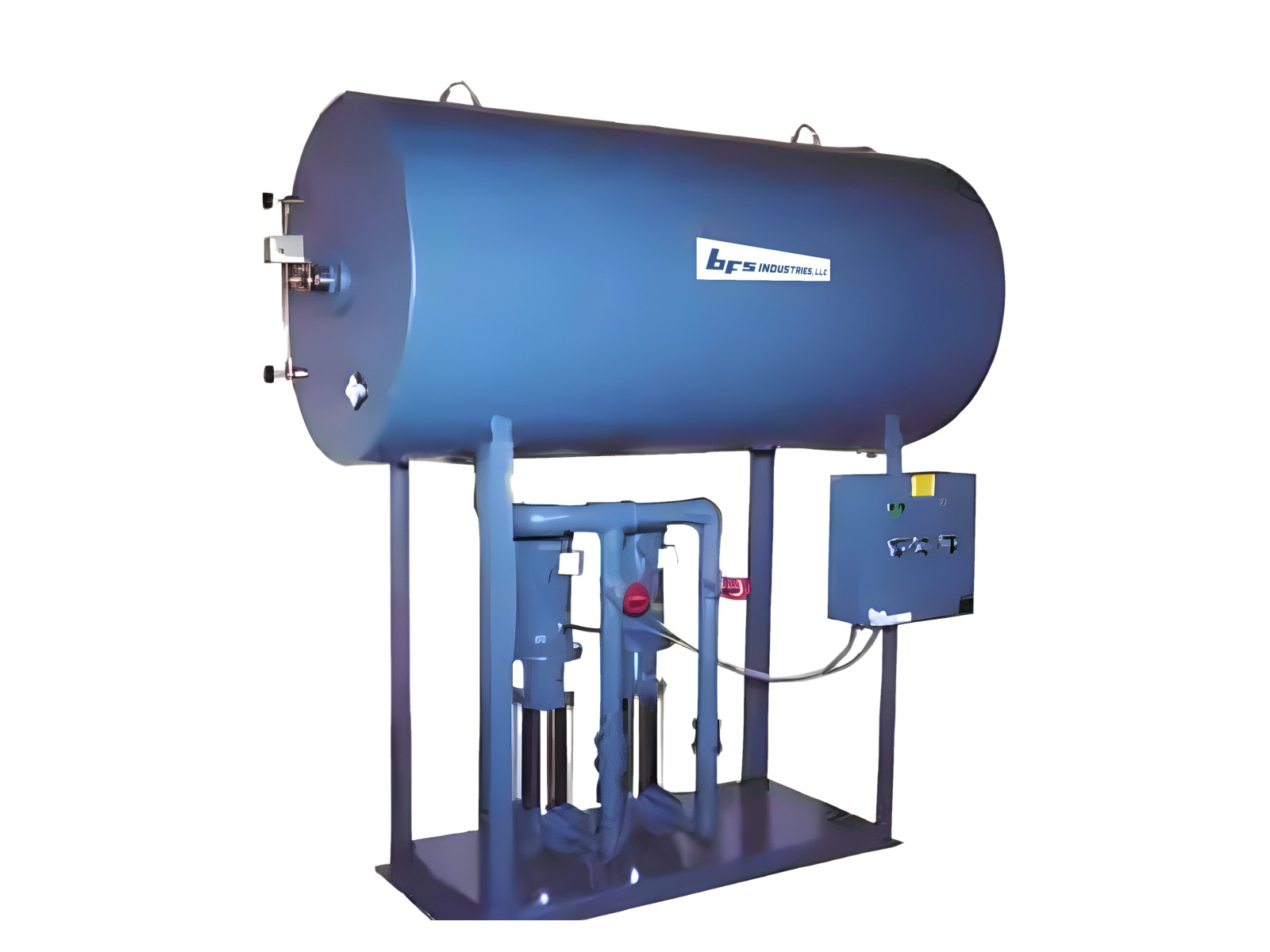
Below that threshold, the condensate tank. For smaller boiler rooms, or those that recover most of their condensate, a well-designed condensate tank often remains the most economical solution. ExoCarbo also supplies BFS Feed-Pac condensate tanks and pumping systems, built on the same principles as its deaerators.
BFS condensate tanks →Need a budget price for your deaerator?
Describe your boiler room (boilers, make-up, condensate returns, options) in our guided form. You receive a confirmation by email and ExoCarbo gets back to you with the BFS Zer-O-Pac selection and budget price.
Three-step form, about 5 minutes.
Calculation tools for your feedwater system
To size or check your installation, ExoCarbo offers free calculators on The Boiler Guide:
Need more technical detail? The guide specification and dimensional drawings for each model are available on request. Contact us
Frequently asked questions
What is the purpose of a deaerator?
To remove dissolved gases from boiler feedwater — mainly oxygen and carbon dioxide — before they reach the boiler. Dissolved oxygen is a leading cause of corrosion in the tube bundle; carbon dioxide acidifies the condensate network. A deaerator serves a second, less visible purpose: it preheats the feedwater to saturation temperature, which the boiler then no longer has to do.
What are the three main types of deaerators?
Deaerators are classified by the mechanism used to break the water into contact with steam: spray type, tray type, and the combined spray-tray design. A separate distinction applies on top of that one — atmospheric versus pressurized — and it is the pressurized configuration that is specified for industrial steam boilers. BFS builds both a spray type (Class S) and a tray type (Class T).
What are the uses of a deaerator?
A deaerator does two jobs at once in any plant that produces steam continuously. It protects the boiler and the condensate network from oxygen and carbon dioxide corrosion, and it recovers heat by bringing the feedwater to saturation before it enters the boiler. The storage tank adds a third function: a reserve of deaerated water that absorbs swings in boiler demand.
Does a deaerator need its own storage tank?
A deaerator comes in two configurations: the deaerating head alone, to be mounted on a separate tank, or the complete unit mounted on its own boiler feedwater storage tank. BFS deaerators are available either way.
The tank serves two distinct purposes. It holds a reserve of deaerated water that absorbs swings in boiler demand — without it, a peak draw would force the system to pump insufficiently treated water. It also keeps that reserve at saturation temperature, which prevents oxygen from redissolving between deaeration and pumping.
Tank volume is determined from the boiler’s steam flow and the storage time targeted. We set that parameter with you at the design stage, along with horizontal or vertical orientation and the footprint in your boiler room.
Which chemical is used in deaerators?
None, strictly speaking — deaeration is a thermal and mechanical process, not a chemical one. Chemical treatment comes after it, as a polishing step: an oxygen scavenger is dosed into the storage tank or the feedwater line to capture the small residual oxygen the deaerator leaves behind. Sodium sulphite and organic scavengers such as DEHA are the common choices, and the selection belongs to the plant water-treatment program rather than to the deaerator itself.
At what pressure does a pressurized deaerator operate?
Most industrial deaerators operate between 5 and 12 psig, which brings the feedwater to 108–118 °C (227–244 °F). The vessel is designed for 50 psig to the ASME code. A higher pressure does not improve deaeration; it mainly serves to raise the feedwater temperature.
How much oxygen is left after a deaerator?
A pressurized deaerator guarantees at most 0.005 cc/litre of dissolved oxygen — about 7 ppb — and the removal of free carbon dioxide. By comparison, a condensate tank preheated to 85 °C still leaves 1 to 5 ppm of oxygen. The guarantee is verified at commissioning with a colorimetric test on a cooled sample.
Is a surge tank needed with a deaerator?
Yes, as soon as condensate returns represent a large share of the feedwater or arrive in slugs. The surge tank collects the returns, blends them with the make-up and feeds the deaerator at a steady rate. With a very high make-up share, it is generally not needed. BFS builds both and can stack them to save floor space.